Overview
Anchor Browser offers a live view feature that allows you to embed an interactive frame of a website as a web element. Thelive_view_url is received when creating a session.
Headful Mode (Default)
Headful mode provides a single URL to view the full chrome view, including the address bar. This ensures the presented tab is always the active tab and provides the best user experience.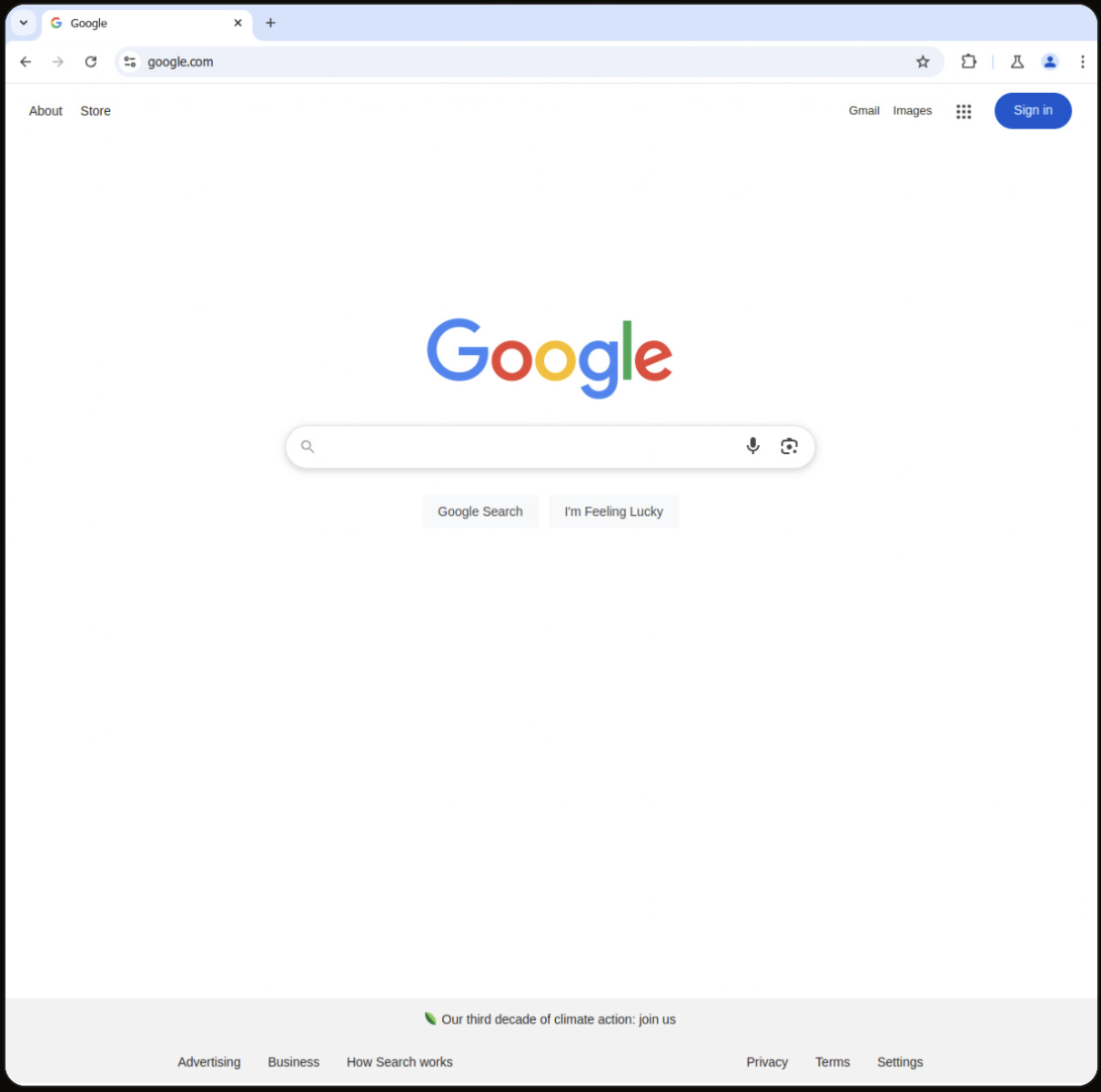
browser.headless.active set to false (the default):
live_view_url from the response to embed the live view directly into an iframe:
Advanced Embedding Configuration
Embed in Fullscreen View (Hide Navigation Bar)
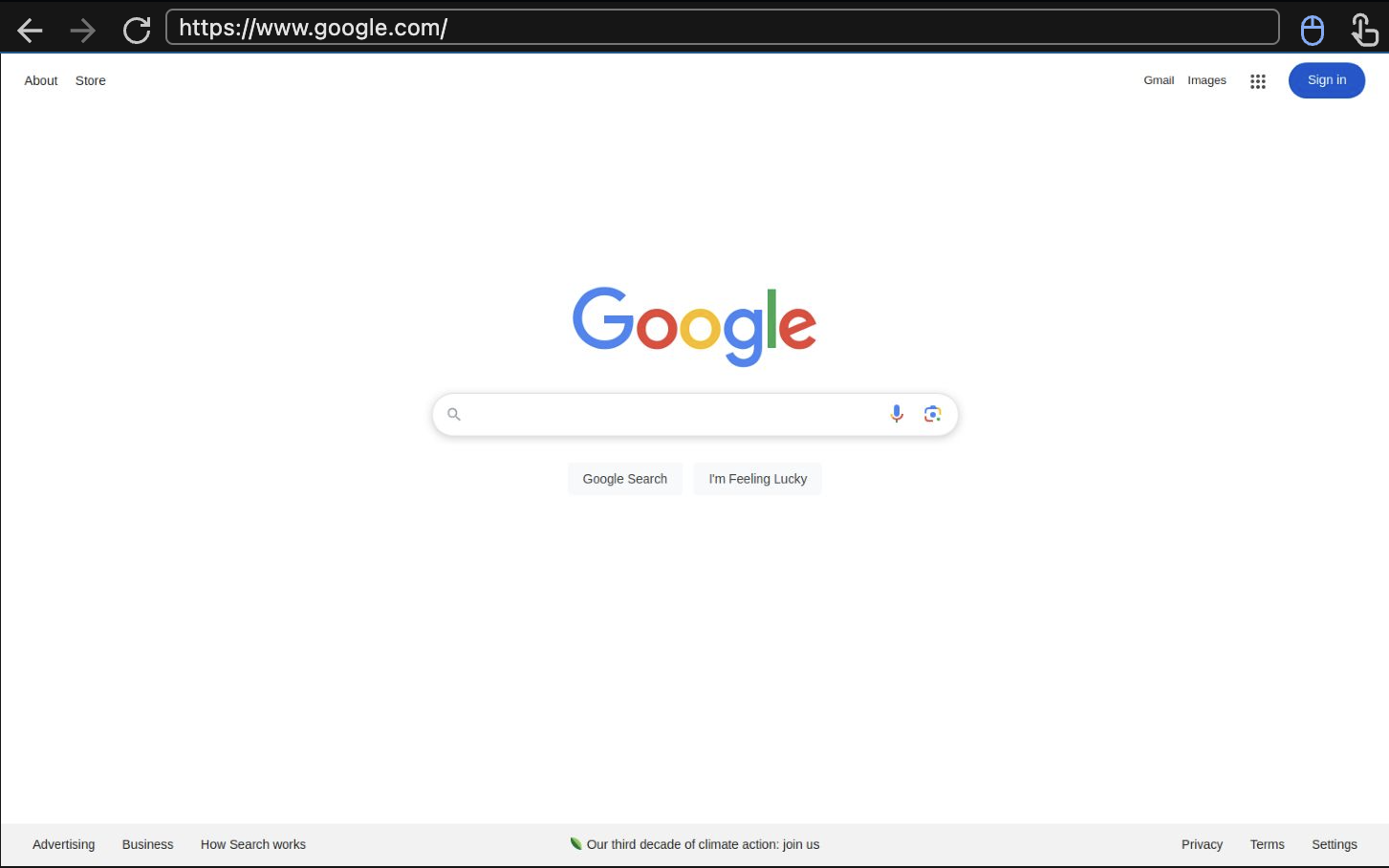
To use the fullscreen view, replace the live view URL with the following:Disable Browser Interactivity
To prevent the end user from interacting with the browser, add thestyle="pointer-events: none;" attribute to the iframe:
This feature is available for both headful and headless modes.
Single-Use Live View URL
To generate a live view URL that can only be used once, setone_time_url to true. After the first viewer connects and disconnects, the URL becomes permanently invalid.
Scoped Access Tokens
To hand a session to an end user without sharing its session id, setsession.scoped_access.active to true. The create response then carries three URLs, each with its own token and no session id:
A read-only viewer and an interactive viewer can watch the same session at the same time. A live view token only opens the live view: it cannot connect over CDP or call the browser’s APIs.
On a scoped session the session id is no longer a credential on its own: connecting to CDP or the live view with only
?sessionId= is refused. Connect with a token (?token=), or with the session id and a token (?sessionId=...&token=...). Any other session switches to tokens the same way as soon as you mint a token for it (see below); sessions that never use tokens keep working with the session id alone.
If the session also sets live_view.read_only, no live view can interact: live_view_url is the same read-only URL as live_view_read_only_url, and cdp_url keeps full control.
POST /v1/sessions/{session_id}/tokens. Pass scopes to choose which URLs to mint, or omit it for every URL the session can serve (no live_view_url on a one_time_url session). Every call returns new tokens:
token from its URL. The URL stops opening new connections; a connection that is already open stays until it closes:
Remote OS cursor
By default, live view draws a cursor at your mouse. To paint the remote OS pointer into the stream instead (needed to watch OS-level mouse APIs), appendshow_cursor=1 to live_view_url:
Headless Mode
To obtain the browser live session URL in headless mode, start by creating a session: